
• Immigrants and Appalachia: The Hidden Story That Built a Mountain Civilization

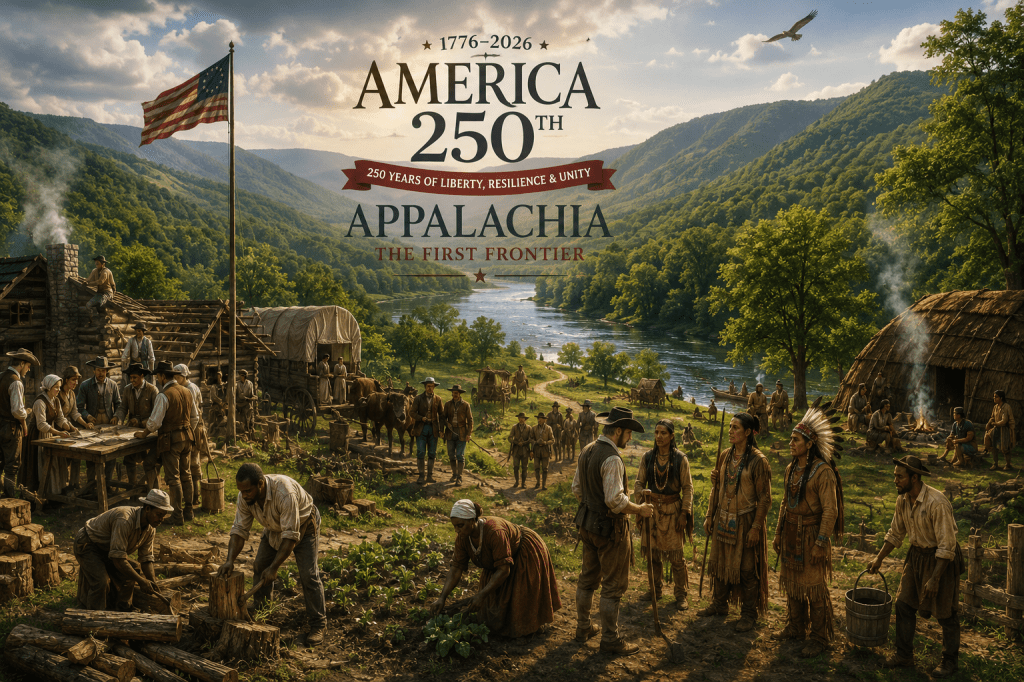
    Appalachia stands today as a living mosaic of peoples, traditions, languages, faiths, and foods. The mountains, valleys, hollers, rivers, and towns reflect centuries of human movement, courage, survival, and adaptation. Every family line in Appalachia traces back to immigrants. Every surname, dialect, recipe, hymn, and craft carries the memory of people who crossed oceans, borders, and frontiers to build new lives in rugged land. Appalachia exists because of immigration, and its identity flows directly from the courage and culture of those who came seeking home, land, work, faith, and freedom.

    Long before the word Appalachia became a label, Indigenous nations lived across these mountains. Cherokee, Shawnee, Yuchi, and other peoples shaped the land with agriculture, trade routes, and spiritual traditions. Their presence formed the first cultural foundation of the region. Later waves of settlers arrived from across the Atlantic, bringing languages, beliefs, and customs that blended into something entirely new. This blending created the cultural soul of Appalachia, a place shaped by movement rather than isolation.

    Scots Irish immigrants arrived in large numbers during the eighteenth century, fleeing religious persecution, economic hardship, and political conflict in Northern Ireland and Scotland. They brought fierce independence, clan loyalty, ballad traditions, storytelling, fiddle music, and a strong work ethic. Their speech patterns shaped Appalachian dialects. Their music became the backbone of mountain folk songs and later influenced bluegrass and country music. Their farming methods adapted to steep hillsides and narrow valleys, creating subsistence farming traditions that sustained families for generations.

    English settlers brought legal systems, land ownership structures, and agricultural practices. Their church traditions shaped early Appalachian faith communities. German immigrants contributed craftsmanship, woodworking skills, herbal medicine knowledge, and food preservation techniques. Sauerkraut, sausage making, bread baking, and root cellaring became common practices in mountain households because of German influence. Their craftsmanship built homes, barns, and tools that supported mountain life.

    Irish immigrants added strong storytelling traditions, spiritual music, and deep community bonds. Welsh immigrants brought mining knowledge that later shaped coal country. Cornish immigrants carried mining expertise that supported Appalachian coal and mineral industries. Each group left fingerprints on the mountains, shaping labor systems, town structures, and economic development.

    African Americans played a central role in shaping Appalachian culture. Enslaved Africans and free Black families carried agricultural knowledge, culinary traditions, music, rhythm, and spiritual expression into the mountains. Cornbread, a staple of Appalachian tables, reflects African culinary influence blended with Indigenous corn traditions. Foodways such as greens, beans, stews, and slow cooked dishes carry African roots. Music traditions like call and response singing, spirituals, work songs, and rhythmic patterns formed the foundation of Appalachian gospel, blues, and folk music.

    African American musicians shaped banjo traditions, string band music, and early country music. The banjo itself has African origins, evolving into one of Appalachia’s most iconic instruments. Black communities in Appalachia built churches, schools, businesses, and social networks that strengthened mountain society. Their contributions created cultural richness that continues today.

    Native American agricultural traditions also shaped Appalachian food culture. Corn, beans, squash, and foraging knowledge formed survival systems for early settlers. Indigenous trail networks became roads. Herbal medicine traditions influenced Appalachian healing practices. The land itself carries their legacy in place names, farming patterns, and environmental knowledge.

    Later immigrant groups continued shaping Appalachia. Italian families arrived to work in mining and construction. They brought food traditions like pasta, bread baking, gardening, and winemaking. Polish immigrants added cabbage dishes, sausage making, and strong church centered communities. Jewish families opened stores, businesses, and trade routes in Appalachian towns, supporting economic growth and community development. Eastern European immigrants brought labor skills, faith traditions, and family centered values that shaped coal camps and industrial towns.

    Chinese immigrants contributed railroad labor, trade networks, and culinary traditions that blended into local foodways. Hispanic and Latino immigrants in modern Appalachia contribute agricultural labor, construction skills, entrepreneurship, and cultural festivals that continue the region’s tradition of cultural fusion. Middle Eastern families brought commerce traditions, hospitality values, and business networks that strengthened small towns.

    Every wave of immigration reshaped Appalachia’s identity. Language blended into dialect. Music blended into new genres. Food blended into new traditions. Faith practices blended into mountain spirituality. Clothing styles adapted to climate and terrain. Architecture evolved from European designs into uniquely Appalachian homes and barns. Survival skills merged into mountain resilience.

    The myth of Appalachia as isolated overlooks its true history as a crossroads of migration. Trade routes passed through the mountains. Rivers connected communities. Railroads brought people from across the world. Coal camps became multicultural settlements. Logging towns housed families from many nations. Mills and factories drew workers from Europe, Africa, Latin America, and Asia. Appalachia developed through cultural exchange, shared labor, and collective survival.

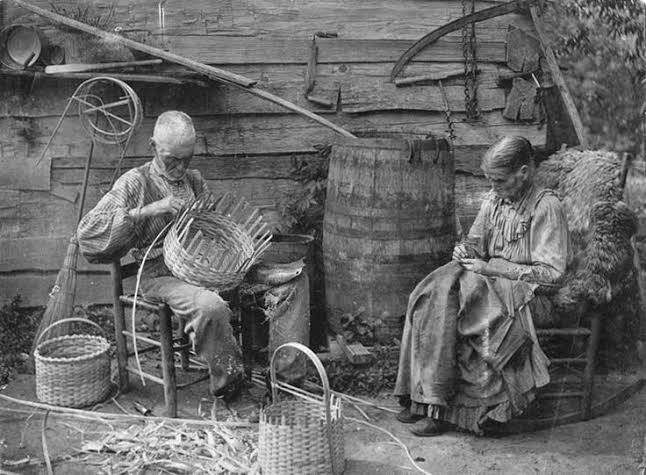
    Immigrant women shaped Appalachian culture through midwifery, herbal medicine, cooking, weaving, quilting, storytelling, and childcare traditions. Their knowledge passed through generations, forming the backbone of family survival. Their recipes became staples. Their songs became lullabies. Their prayers became community rituals.

    Faith traditions also reflect immigration. Protestant denominations shaped early mountain churches. Catholic immigrants built parishes. Jewish communities formed synagogues. African spiritual traditions influenced worship styles. Appalachian religion reflects global roots expressed through mountain culture.

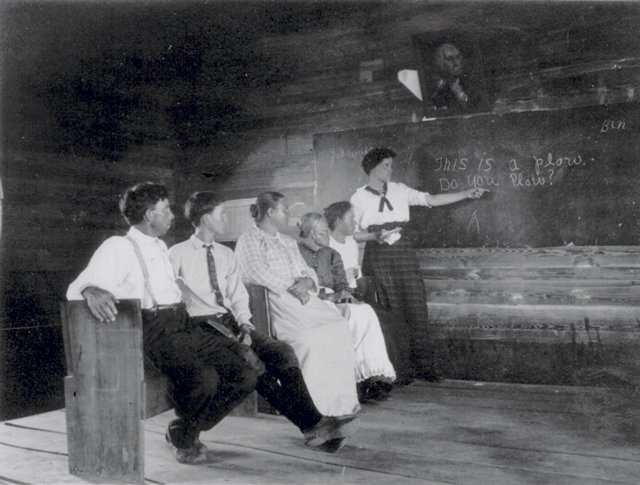
    Education systems grew from immigrant efforts. Schools formed in church buildings. Literacy spread through family teaching. Craft traditions passed through apprenticeships. Music education passed through community gatherings. Knowledge transmission sustained cultural continuity.

    Even Appalachian resilience itself reflects immigrant experience. Survival in harsh terrain required cooperation, adaptation, and innovation. Families shared food, tools, labor, and knowledge. Communities formed mutual aid systems. These values mirror immigrant survival strategies across history.

    The idea of pure lineage dissolves under historical truth. Every Appalachian family descends from movement. Borders shifted. Names changed. Languages blended. Bloodlines crossed. Identity formed through shared land rather than shared origin. Appalachia became a home for people seeking stability after displacement.

    Today’s Appalachia continues this legacy. New immigrants arrive, bringing languages, foods, music, and traditions that blend into the mountain fabric. Festivals celebrate diversity. Markets sell global foods. Schools teach multicultural histories. Churches welcome multilingual worship. The region grows richer through cultural exchange.

    Appalachia’s beauty comes from its diversity. Its strength comes from shared struggle. Its soul comes from blended heritage. Immigrants built its roads, farms, towns, mines, music, kitchens, churches, and communities. Every porch song, every family recipe, every quilt pattern, every hymn, every garden row carries immigrant memory.

    To honor Appalachia means honoring immigration. To understand Appalachia means understanding movement. To love Appalachia means embracing its multicultural roots. The mountains stand as witnesses to centuries of courage, hope, faith, and resilience carried by people from every corner of the world.

    Immigrants shaped the soil, the sound, the spirit, and the story of Appalachia. Their descendants carry forward traditions that continue evolving. Appalachia remains alive because people continue coming, building, sharing, and belonging. The region’s identity flows from the truth that home can be built anywhere people commit to one another and to the land they love.

    Appalachia stands today as proof that immigration creates culture, community, and continuity. It shows how diversity strengthens identity. It reveals how shared labor creates belonging. It teaches that roots grow through movement, not stillness. The mountains hold countless stories of arrival, survival, and transformation. Those stories form the heart of Appalachia, a land shaped by immigrants who turned wilderness into home and difference into unity.

    -Tim Carmichael

  • Urban Appalachia: Rural Memory Inside the Modern City

    Urban Appalachia exists in cities like Asheville, Knoxville, and Charleston, West Virginia, whether city leaders acknowledge it or not. These places did not suddenly become “mountain cities” once tourism and development arrived. They grew from river crossings, rail hubs, and industrial corridors where families from surrounding counties settled for work, stayed through decline, and built neighborhoods long before the cities were considered desirable. The tension shaping urban Appalachia today comes from that history colliding with rapid growth driven by outside money, new residents, and an economy that often values image more than continuity.

    The idea that Appalachian culture belongs only to remote hollers collapses inside these cities. Urban neighborhoods once held vegetable gardens behind duplexes, smokehouses near alleys, and informal labor exchanges that mirrored rural patterns. City life altered the scale of these practices rather than erasing them. What changed most was visibility. As development accelerated, the quieter forms of Appalachian life faded from public narratives, replaced by curated versions designed for outside consumption.

    The controversy surrounding urban Appalachia begins with ownership of story. City branding campaigns celebrate mountain heritage through murals, festivals, and slogans, presenting culture as welcoming, creative, and timeless. Missing from these portrayals are the economic pressures, labor struggles, and displacement shaping daily life for long-term residents. Culture becomes scenery rather than lived experience, a background aesthetic supporting growth rather than a force guiding it.

    Migration built these cities through necessity rather than aspiration. Coal decline, farm consolidation, and industrial shifts pushed families toward urban centers offering wage labor. Mill work, rail yards, hospitals, and government offices provided stability compared to rural uncertainty. Appalachian identity traveled with these workers into row houses and apartment blocks. Church communities reorganized around city schedules. Food preservation continued in basements and shared freezers. Storytelling adapted to kitchens instead of porches.

    Present narratives often treat Appalachian presence in cities as a rediscovery rather than a constant. That framing allows new residents and investors to position themselves as cultural stewards while ignoring those who maintained traditions during decades when the cities lacked prestige. Long-term residents see their history reframed through outsider language that prizes charm over continuity.

    Tourism amplifies this tension most visibly in Asheville. Visitors arrive seeking authenticity, music, and craft rooted in place. Businesses respond with curated experiences drawing from Appalachian imagery. Handmade aesthetics, reclaimed materials, and folk references dominate commercial spaces. Economic growth follows, yet control over representation drifts away from communities whose lives shaped the culture being sold.

    The problem extends beyond taste. When culture becomes product, certain expressions gain value while others disappear. Mountain identity linked to poverty, labor organizing, or environmental resistance finds little space in tourist economies. The acceptable Appalachian becomes friendly, artistic, and apolitical. The unacceptable version fades from view, even though it remains central to lived reality.

    Housing pressure exposes the cost of this transformation. Rising property values push long-established residents toward city edges where services thin and transportation costs rise. In Asheville and Knoxville, neighborhoods once dismissed as undesirable suddenly attract investors. Property taxes climb faster than wages, forcing families to choose between relocation and financial strain.

    Displacement fractures cultural continuity. Extended families scatter. Churches lose generational depth. Informal support systems weaken. The loss affects more than housing stock. It removes memory anchored to specific streets and hillsides. City leaders describe revitalization as progress, while residents experience erasure. Policy choices drive these outcomes through zoning decisions, tax incentives, and rental regulations that favor capital mobility over rootedness.

    Labor identity adds another layer of conflict. Urban Appalachia once promised upward movement through industrial employment. Those pathways narrowed as manufacturing declined. New economies emphasize healthcare, education, hospitality, and remote professional services. These sectors require credentials and cultural fluency unevenly distributed across populations shaped by extraction-era schooling and limited access.

    Service work fills gaps, offering employment without stability. Regional pride rhetoric celebrates resilience while ignoring precarity embedded in the labor market. Appalachian identity becomes symbolic rather than protective. The cities profit from narratives of grit without providing material conditions supporting those who embody it.

    Environmental values further complicate urban growth. Appalachian relationships with land emphasize observation, restraint, and adaptation learned through experience rather than policy. Urban expansion often dismisses this knowledge. Hillsides are cut, waterways altered, and flood risks amplified. When disasters strike, officials acknowledge local warnings retroactively.

    Charleston’s flood history illustrates this pattern. Residents remember how land behaved across generations. Their observations carried little weight during planning processes dominated by technical assessments. After damage occurs, those same insights gain legitimacy. The cycle reinforces perceptions that lived knowledge holds low value until validated by crisis.

    Green branding attempts to bridge this gap while often deepening it. Sustainability language appears alongside development practices that strain ecosystems. Bike lanes and rooftop gardens coexist with deforestation and watershed stress. Residents recognize contradiction rather than balance, fueling distrust toward environmental promises framed without community authority.

    Education institutions shape urban Appalachia in powerful ways. Universities bring resources, global networks, and demographic shifts. They also create cultural distance between students and surrounding neighborhoods. Academic interest in Appalachia thrives inside these cities, producing research and programming that rarely translates into material benefit for those studied.

    Long-term residents express fatigue with constant observation. Being analyzed without agency reinforces extraction dynamics echoing the region’s economic history. Education remains a source of aspiration within Appalachian families, yet institutional expansion often displaces housing or reshapes neighborhoods without inclusive planning.

    Political identity within urban Appalachia defies simple classification. Cities lean progressive compared to surrounding areas, though residents hold views shaped by labor history, religious practice, and skepticism toward centralized authority. Political messaging flattens these complexities, reducing engagement to demographic targets.

    Urban governance privileges those fluent in bureaucratic language and process. Planning meetings reward time, transportation access, and confidence navigating formal systems. Many long-term residents feel sidelined even as civic participation initiatives expand. Power concentrates among professionals whose attachment to place may remain temporary.

    Despite these pressures, Appalachian culture persists through adaptation rather than nostalgia. Mutual aid networks operate quietly. Music scenes resist commercialization by favoring informal venues. Food traditions continue through exchange rather than branding. Urban gardens preserve seed knowledge on limited land. Churches adjust rhythms around shift work and caregiving demands.

    These practices survive without recognition, sustained by necessity and care rather than policy. The controversy lies in how success is measured. Festivals, murals, and heritage districts offer visible markers of preservation, while the material conditions supporting lived culture receive less attention. Preservation through display differs fundamentally from preservation through stability.

    Urban Appalachia forces a confrontation with uncomfortable questions about progress, ownership, and respect. Cities can pursue development models centered on affordability, resident leadership, and cultural continuity. They can also continue extractive growth patterns that treat heritage as a renewable resource disconnected from people.

    The stakes remain high because cultural ecosystems depend on density and continuity. Once displacement reaches a tipping point, restoration proves difficult. Fragmentation disrupts transmission across generations, leaving symbols without substance.

    Urban Appalachia challenges the assumption that rural tradition and urban life exist in opposition. The reality reveals coexistence shaped by power imbalance, negotiation, and endurance. Whether mountain cities choose futures grounded in respect rather than exploitation will determine whether Appalachian culture remains a living practice or survives only as imagery curated for passing audiences.

    -Tim Carmichael

  • My New Book Has Been Published

    My poetry collection Beautiful and Brutal Things is done. It’s actually done and finally published over 270 pages.

    Over a year of my life went into this book. More than a year, really. Long days at my computer, sometimes seven days a week because I couldn’t stop even when I probably should have. Then two months of editing that felt harder than the writing itself. But it’s finished, and I’m still standing, and the book is real.

    I called it Beautiful and Brutal Things because that’s what life is. Both at once, all the time. The good stuff and the hard stuff, happening side by side. All of it went into these poems.

    There’s grief in here. Love. Everyday stuff that maybe doesn’t seem like much until you write it down and realize it was everything. Some poems that might lift you up when you need it. I just wrote what I needed to write, about life and what was true.

    I don’t really know what else to say except thank you. Thank you for reading poetry, for caring about it, for giving a damn about words on a page. That means more than you know to me.

    I hope you find something in these poems that feels like words you want to say or do say.

    Click on the link below to read a sample. Or even get your own copy. Thanks again for all of the support.

    -Tim

  • Beyond Appalachia: Venerable Monks, the Walk For Peace, and a Nation Searching for Common Ground

    This story reaches beyond Appalachia and into the heart of a country searching for calm during an era shaped by sharp division. Along highways, through small towns, and across city streets, Venerable Monks walk in quiet formation as part of The Walk For Peace. Thousands of people gather simply to witness them pass. Some stand silently. Others join for a few miles. Many describe a sense of relief that comes from watching a peaceful act unfold in public space.

    The monks began their journey on Oct. 26, 2025, in South Carolina. Their pilgrimage stretches across nine additional states: Texas, Louisiana, Mississippi, Alabama, Georgia, North Carolina, Virginia, and Maryland. The walk is expected to conclude on Feb. 13, 2026, at the United States Capitol in Washington, D.C. The route covers hundreds of miles and several months, demanding discipline, patience, and deep commitment from every participant.

    The Walk For Peace draws attention because it stands apart from demonstrations driven by slogans or confrontation. The monks carry no signs. They chant softly or remain silent. Their pace stays slow and deliberate. The simplicity of the walk invites reflection rather than reaction, and that difference draws people who feel overwhelmed by constant political tension.

    Crowds gather early along the route. Families bring children. Veterans stand at attention. Faith leaders from various traditions watch respectfully from sidewalks. Many people say they feel compelled to attend even without fully understanding why. The sight of monks walking together offers a visual reminder that peace can exist as a lived practice rather than an abstract idea.

    The presence of Appalachia in the title reflects admiration for what the region represents rather than geography. Appalachia carries associations of endurance, humility, and strong community ties. Those values align closely with the spirit of the walk. Both reflect a way of life grounded in restraint, care for neighbors, and respect for tradition.

    The monks participating in the walk come from Buddhist traditions rooted in centuries of practice. Buddhism is a religion and philosophy that evolved from the teachings of Gautama Buddha, a prince turned teacher believed to have lived in northern India. He is thought to have attained enlightenment sometime between the 6th and 4th centuries B.C. After his death, his teachings spread across Asia, shaping cultures, ethics, and spiritual practices for generations. Buddhism later arrived in Western countries during the 20th century through immigration, scholarship, and the work of teachers who shared its principles more broadly.

    At the core of Buddhist teaching lies a focus on ending suffering. The Buddha taught that liberation from the cycle of birth, death, and reincarnation comes through ethical living, mental discipline, and wisdom. This path includes non-violence, meditation, and compassion for all beings. These principles guide the monks as they walk, shaping every step and interaction along the way.

    Over centuries, Buddhism developed many schools and traditions, each with distinct practices and interpretations. Even with this diversity, a strong current of peace activism runs through Buddhist history. Modern figures such as the Dalai Lama and Thich Nhat Hanh brought these teachings into global conversations about war, human rights, environmental responsibility, and reconciliation. Their work demonstrated how inner discipline could inform social action without aggression.

    The Walk For Peace stands firmly within that tradition. The monks view the pilgrimage as both spiritual practice and public offering. Walking becomes meditation in motion. Each step receives full attention. Each breath serves as an anchor to the present moment. The goal centers on cultivating peace within oneself and offering that calm outward to others.

    People who walk alongside the monks often describe a shift in their own awareness. Conversations quiet down. Phones stay in pockets. The rhythm of walking encourages reflection. Many participants say the experience helps them release anger or anxiety carried for years. Others find themselves thinking about neighbors, family members, or political opponents with renewed empathy.

    Local communities along the route prepare weeks in advance. Volunteers arrange meals, resting spaces, and safe walking conditions. Law enforcement agencies often assist with traffic control, reporting that interactions remain calm and cooperative. Residents open homes and community centers to host the monks overnight. These acts of hospitality create connections that extend beyond the duration of the walk.

    Media coverage tends to focus on the visual impact of the pilgrimage. Long lines of monks moving through modern landscapes create striking images. Office buildings, fast-food restaurants, and busy intersections form the backdrop. The contrast draws attention, yet the monks themselves remain unconcerned with publicity. Their focus stays inward, guided by practice rather than performance.

    The appeal of The Walk For Peace reflects a broader longing across the country. Many people express fatigue with political language that frames neighbors as enemies. The walk offers a shared experience without demanding agreement. Participation requires only presence and respect. That accessibility allows people from many backgrounds to stand together without pressure to explain or defend beliefs.

    Children often show particular curiosity. They ask why the monks walk barefoot or wear simple robes. Parents and teachers use these moments to discuss kindness, patience, and self-control. In this way, the walk becomes an informal classroom, teaching values through example rather than instruction.

    Older generations often speak about memories stirred by the pilgrimage. Some recall marches for civil rights or peace during earlier decades. Others reflect on community rituals that once brought people together across differences. The walk reconnects them with a sense of shared purpose rooted in mutual care.

    Religious leaders from outside Buddhism sometimes join portions of the route. Their participation highlights common ground across faith traditions. Compassion, humility, and service appear as shared values rather than points of division. These moments of interfaith solidarity resonate strongly with observers seeking hope amid cultural fracture.

    Economic effects also ripple gently through communities. Hotels host visitors. Local restaurants see increased traffic. Small towns gain positive attention centered on cooperation rather than conflict. Residents often express pride in hosting an event that reflects peaceful values.

    The monks remain committed to discipline throughout the journey. Long days of walking challenge the body. Weather shifts test endurance. Silence requires constant mindfulness. Through these conditions, the monks practice equanimity, accepting discomfort without resentment. Observers often describe this composure as inspiring in a society driven by urgency and competition.

    The Walk For Peace concludes in Washington, D.C., at the Capitol, a location symbolizing national power and debate. The choice of destination carries meaning. The monks bring their practice to a place shaped by decision-making that affects millions. Their arrival offers a reminder that leadership grounded in compassion carries transformative potential.

    As the pilgrimage draws toward its final days, participants return home carrying lessons learned along the road. Many speak about slowing down daily routines. Others describe changes in how they approach disagreement. Some begin meditation practices inspired by what they observed.

    This journey reaches beyond Appalachia while honoring the values often associated with it: resilience, humility, and deep-rooted community. The Venerable Monks and The Walk for Peace stand as a silent response to division. Through steady movement and disciplined presence, they offer a living example of how peace can take shape within everyday life, one step at a time.

    -Tim Carmichael

  • Appalachia’s Last Chance or Next Extraction: How AI Data Centers Are Rushing Into the Mountains

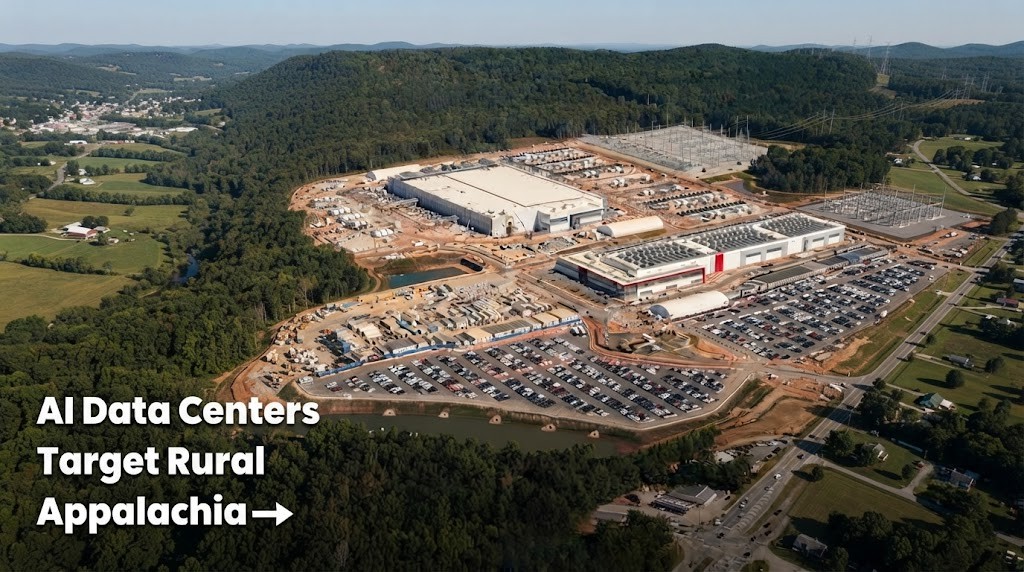
    Appalachia carries the burdens of an unfinished past. The collapse of coal stripped away livelihoods, emptied towns, and left streams and hillsides bearing the scars of a century of extraction. Economic decline followed environmental damage, and many communities remain caught between nostalgia for stability and the reality of shrinking opportunity. Into this landscape comes a new industry with enormous appetites for land, power, and water. Massive data centers built to feed artificial intelligence systems are moving toward the mountains, presenting themselves as the future of prosperity.

    Across eastern Kentucky, southern West Virginia, and southwest Virginia, rural counties once defined by mining now appear on development maps for digital infrastructure. Former strip mines, forested ridges, and isolated valleys are being evaluated as sites for server campuses that rival cities in energy demand. Supporters see a path toward renewed tax bases and public services. Opponents fear another cycle where outside capital profits while local people shoulder the costs.

    Coal once promised generational security. That promise collapsed, leaving behind economic fragility and deep distrust. Data centers arrive carrying similar language of revival, though powered by servers rather than seams. The question facing Appalachia centers on whether this moment leads toward lasting renewal or repeats a familiar story under a different banner.

    The appeal of the region to technology companies grows from several factors. Large tracts of inexpensive land remain available, often close to transmission lines originally built for coal plants. Natural gas infrastructure already runs beneath many counties. Cooler mountain air can lower cooling expenses, and abandoned industrial sites reduce acquisition costs. As metropolitan data center hubs approach saturation, rural regions with fewer regulatory barriers draw increasing interest.

    National demand for computing power continues to surge. Artificial intelligence models require immense processing capacity, and companies race to secure space capable of supporting that growth. Appalachia offers room to expand, along with political leaders eager to attract investment after decades of decline. The convergence of corporate urgency and regional desperation creates fertile ground for rapid development.

    Economic arguments dominate early discussions. County officials emphasize construction spending measured in the hundreds of millions or even billions. Property taxes from equipment promise steady revenue that could fund schools, emergency services, and infrastructure. In areas where coal severance taxes vanished, such projections appear transformative.

    Critics challenge those expectations. Construction phases employ many workers, though most positions end once buildings reach completion. Operational staffing remains limited relative to the physical scale of these facilities. Security, maintenance, and cleaning roles form the bulk of permanent employment, while higher paying technical jobs often go to specialists from elsewhere. For communities that lost entire industries, the mismatch between footprint and workforce fuels skepticism.

    Electricity demand presents one of the most complex challenges. Data centers operate around the clock, drawing vast amounts of power. As multiple projects connect to regional grids, demand accelerates faster than new generation capacity. Utilities respond by upgrading transmission networks and securing additional supply, expenses distributed across all customers. Households already facing rising energy costs worry about subsidizing facilities serving global corporations.

    Across the broader region, electricity prices have climbed sharply in recent years. Analysts increasingly connect that trend to the explosive growth of data centers. For families on fixed or modest incomes, even small increases strain budgets. The idea that rural residents might pay more so distant users can stream content or train algorithms generates anger that crosses political lines.

    Water use raises another set of concerns. Many data centers rely on cooling systems that withdraw millions of gallons annually. In areas that experienced droughts during recent summers, additional strain on aquifers and rivers feels risky. Developers highlight newer cooling technologies designed to reduce consumption, including air based systems and closed loop designs that reuse water. Some proposals aim to tap underground mine pools that remain cool year round.

    Such innovations intrigue planners, though residents worry about cumulative impacts as more facilities cluster in the same watersheds. Memories of contaminated wells and streams from mining days remain vivid. Trust eroded over generations proves difficult to rebuild through technical assurances alone.

    Quality of life issues shape local resistance as strongly as economics. Data centers generate constant noise from cooling equipment and backup generators. In quiet mountain valleys, that hum travels far, especially at night. Security lighting alters dark skies treasured by residents and visitors. Large buildings and access roads transform rural landscapes built around recreation and solitude.

    Many towns rebuilt their economies around outdoor tourism after coal declined. Hiking, fishing, and stargazing draw visitors seeking peace and natural beauty. Industrial scale facilities threaten those gains, creating fears that one form of extraction could undermine the alternative that finally brought stability.

    Governance sits at the heart of many conflicts. In some states, laws reduce local authority over zoning and permitting for large technology or energy projects. Proponents argue streamlined approval attracts investment and strengthens competitiveness. Local residents often view the shift as a loss of self determination, especially when decisions affecting daily life move to distant capitals.

    Counties lacking zoning frameworks tailored to data centers face additional vulnerability. Projects can advance with limited public scrutiny, leaving residents scrambling to respond once plans surface. That dynamic deepens mistrust and fuels organized opposition.

    Grassroots movements have formed rapidly wherever proposals emerge. Yard signs, packed meetings, and citizen groups reflect a shared sense that communities must defend their interests. These coalitions rarely reject development outright. Many participants express willingness to consider projects that meet strict standards for water use, noise limits, emissions, and financial accountability.

    Local officials face conflicting pressures. Budgets remain tight, and few alternatives promise comparable revenue. Turning away investment risks political fallout, especially in areas desperate for economic lifelines. The result becomes a tense balancing act where every proposal sparks intense debate.

    History looms over these discussions. Coal reshaped Appalachia while exporting much of its wealth. Environmental damage lingered long after profits departed. Data centers revive fears of repeating that pattern, replacing black dust with invisible costs carried through utility bills and strained resources.

    Unlike mining, digital infrastructure leaves fewer obvious scars. Its impacts emerge gradually through rising rates, depleted water supplies, and altered landscapes. That subtlety complicates accountability and strengthens calls for enforceable agreements rather than voluntary promises.

    Advocacy groups across the region propose frameworks aimed at responsible development. Common principles include full disclosure of energy and water use, binding limits on noise and emissions, and protections ensuring infrastructure costs remain with developers rather than residents. Many urge siting facilities on previously disturbed land instead of forests or farmland.

    Labor standards form another focus. Advocates call for fair wages, local hiring, and training programs during construction. Community benefit agreements appear increasingly popular as tools to secure investments in public needs before approvals occur. Such measures seek to shift power back toward communities long accustomed to external control.

    The stakes extend beyond individual towns. National projections suggest data centers could claim a significant share of total electricity consumption within a few years. Meeting that demand requires new generation somewhere. Appalachia, with its land, water, and energy infrastructure, stands squarely in the path of that expansion.

    Choices made now will shape the region for decades. Strong oversight and genuine community participation could allow digital infrastructure to support recovery without repeating historical harms. Weak safeguards risk locking Appalachia into another extractive relationship that drains value outward.

    Residents across the mountains weigh hope against caution. Many want opportunities that allow younger generations to stay. They also want clean water, affordable power, and a voice in decisions shaping their surroundings. Data centers embody both promise and peril, standing at the intersection of technological ambition and a region shaped by past sacrifice.

    Appalachia has faced turning points before. The rush of artificial intelligence infrastructure marks another defining moment. Whether it becomes a foundation for shared prosperity or another chapter of loss depends on who holds power, who bears cost, and whether the lessons of history guide the future.

    -Tim Carmichael

  • In Some Parts of Appalachia, After December Ends, They Keep Christmas Alive

    Long after the glittering rush of December fades across the rest of the country, certain Appalachian communities gather again on January 6th to mark a day tied to faith, history, and cultural endurance. This observance traces back to a calendar shift that reshaped the Christian world yet left pockets of people holding fast to an earlier rhythm of time.

    January 6th stands as Old Christmas, a date once assigned for celebrating the birth of Jesus under the Julian calendar. During the late sixteenth century, Pope Gregory XIII introduced the Gregorian calendar, shifting Christmas to December 25th. Many European regions adopted the new calendar, while others moved more slowly or resisted entirely. Immigrants from Scotland, Ireland, England, and parts of Eastern Europe carried older customs across the Atlantic. In the isolated hollows and ridges of Appalachia, these customs endured, sheltered by geography and strengthened by community bonds.

    For Appalachian families, Old Christmas grew into more than a historical footnote. It became a symbol of continuity, honoring ancestors who observed holy days according to older reckonings. Mountain communities valued self-reliance and oral tradition, passing stories and practices from one generation to the next. Old Christmas fit naturally within this framework, offering a sacred pause after the bustle of December and a chance to reflect on faith without distraction.

    Celebration in Appalachia carried a quieter tone than modern holiday displays. Old Christmas unfolded much like a Sunday set apart for rest and reflection. Homes remained simple, free from bright lights or elaborate decorations. The focus centered on gathering, meals, and spiritual contemplation. Families prepared special foods using ingredients on hand, often featuring cured meats, beans, cornbread, apples, and preserved vegetables. These meals represented care and effort rather than excess.

    Visiting formed a central part of the day. Neighbors walked across ridges or followed creek paths to sit together, talk, sing, and share news. Music played a role in many households, especially hymns passed down through generations. Fiddles and banjos sometimes joined voices, filling cabins with sounds older than the mountains themselves. Storytelling flourished, sharing memories of ancestors with reflections on scripture and seasonal change.

    Faith provided the foundation for Old Christmas observance. Many Appalachian Christians viewed January 6th as a time to honor the birth of Christ according to the calendar their forebears trusted. Churches held special services in some areas, featuring prayer, scripture readings, and sermons focused on humility and gratitude. The timing after December offered space for deeper reflection, free from commercial pressures tied to the earlier holiday.

    The reason for preserving Old Christmas reached beyond theology. Observing the day affirmed Appalachian identity in a world that often misunderstood or dismissed mountain culture. Maintaining this celebration signaled pride in heritage and respect for elders who shaped community values. In regions where change arrived slowly, holding onto Old Christmas felt like honoring the land itself, steady and enduring.

    Appalachian people celebrate Christmas on December 25th as well. Families exchange gifts, attend church, decorate homes, and share meals alongside the rest of the nation. When asked, most would say they celebrate Christmas Day on the 25th with joy and devotion. January 6th arrives as an additional observance rather than a replacement. This dual celebration reflects flexibility within tradition, allowing communities to engage with broader society while keeping older customs alive.

    Old Christmas today varies widely across Appalachia. In some hollows, the day continues much as it did a century ago, marked by simple meals, family visits, and faith. In other areas, awareness of the tradition survives through stories shared by elders, local historians, and cultural festivals. Schools, libraries, and heritage groups sometimes host events or discussions to educate younger generations about the meaning behind the date.

    The Amish, who share values of simplicity and separation from modern excess, observe holidays like Old Christmas in ways that echo broader Appalachian customs. Their households spend the day resting, sharing food, visiting relatives, and reflecting on religious meaning. Decorative displays remain absent, and emphasis rests on humility and community. While Amish communities follow their own religious practices, parallels exist in the desire to keep celebration grounded and sincere.

    Geography played a major role in preserving Old Christmas. Mountain isolation limited outside influence for generations, allowing customs to remain intact. Roads arrived late to many areas, and mass media followed even later. This separation fostered strong local identities, where shared practices reinforced trust and cooperation. Old Christmas fit within this social fabric, offering a shared experience that reaffirmed belonging.

    Economic factors also shaped the celebration. Appalachia endured long periods of hardship, where extravagance held little appeal. A holiday focused on rest, faith, and fellowship suited communities accustomed to making do with available resources. Old Christmas required few purchased decorations or lavish gifts, aligning with values of thrift and gratitude.

    As Appalachia changes, Old Christmas faces challenges. Younger generations often move away for work, encountering different customs and schedules. Modern life leaves little room for extra holidays, especially those outside official calendars. Even so, interest in regional heritage has grown in recent years. Many people seek connections to roots amid rapid change, and Old Christmas offers a tangible link to ancestral ways of living.

    Social media and regional storytelling have sparked renewed curiosity about the holiday. Photos of January gatherings, simple meals, and snowy landscapes circulate online, drawing attention to a celebration unfamiliar to many Americans. Writers, musicians, and folklorists contribute essays and songs that keep the memory alive. Through these efforts, Old Christmas continues to resonate beyond the mountains.

    The heart of Old Christmas lies in its emphasis on presence rather than performance. Appalachian observance values time spent together, shared labor in preparing food, and quiet acknowledgment of spiritual meaning. This approach contrasts sharply with modern holiday culture, which often centers on consumption and spectacle. For many, Old Christmas serves as a reminder that celebration can remain meaningful without excess.

    January 6th also aligns with Epiphany in many Christian traditions, commemorating the visit of the Magi to the infant Jesus. This connection adds another layer of significance, linking Appalachian practice to a wider global context. Observers see the day as a continuation of the Christmas season rather than an afterthought, extending joy and reflection into the new year.

    Whether Old Christmas thrives or fades depends largely on storytelling. Elders who recall childhood gatherings play a vital role in passing down memories. When these stories reach younger ears, the holiday gains new life. Some families choose to revive the observance as a way to slow down after December, creating space for connection during winter’s quiet stretch.

    Old Christmas in Appalachia stands as a testament to cultural beliefs. It reflects a community’s ability to adapt while holding fast to core values. The celebration honors faith, family, and history through simple acts that speak louder than spectacle. In the hush of a January evening, with neighbors gathered around a table and hymns drifting through the hollers, the spirit of Old Christmas endures, steady as the mountains themselves.

    -Tim Carmichael

  • Appalachia and a Familiar Question: Why Leaders Keep Taking From the Poor While the Rich Stay Shielded

    A safe roof offers warmth during harsh winters, stability for families raising children, and dignity for elders who spent decades working in mines, mills, farms, and service jobs. For many communities scattered across this vast region, private capital rarely arrives. Banks hesitate, developers look elsewhere, and wages remain low. Federal support fills a gap that local economies struggle to close on their own. Among the most important sources of that support stands the HOME Investment Partnerships Program, a grant that has quietly underwritten housing opportunity for more than three decades.

    Donald Trump has expressed a desire to eliminate that grant, and House Republicans overseeing federal budget negotiations excluded funding for it in their proposal. That choice sends shock waves through housing agencies, nonprofit builders, and town governments across the nation. Experts warn that such a move would set back tens of thousands of future affordable housing developments. The pain would land hardest in Appalachian towns and rural counties where public aid remains scarce and investors remain few.

    Appalachia carries a long history of extraction and neglect. Coal, timber, and labor flowed out for generations, while wealth concentrated far from the mountains. Many counties still face persistent poverty, aging housing stock, and limited tax bases. In these places, the HOME program serves as a foundation stone. It provides flexible grants to states and localities, allowing them to build, buy, or repair housing for low income residents. Without this stream of funding, many projects never reach the starting line.

    The program has helped build or repair more than 1.3 million affordable homes during the past thirty years. At least 540,000 of those homes sit in congressional districts that count as rural or significantly rural, according to an Associated Press analysis of federal data. Appalachia features heavily in those numbers. From eastern Kentucky to southern West Virginia, from western North Carolina to parts of Ohio and Pennsylvania, HOME dollars have supported modest houses, small apartment complexes, and critical repairs that keep families safe.

    Poor households across Appalachia depend on this grant in direct and indirect ways. A single HOME funded project may create rental units for seniors living on fixed incomes. It may help a young family purchase a first home through down payment assistance. It may replace a failing roof, repair unsafe wiring, or install a ramp for a resident with limited mobility. Each intervention reduces stress, improves health, and anchors people to their communities.

    State housing agencies describe the program as one of the few tools suited to rural realities. Large tax credit developments often struggle in low population areas. Construction costs rise due to distance from suppliers, while potential rents remain low due to limited wages. HOME funds help close those gaps. They blend with other sources, making deals workable where markets alone would fail. Removing that piece collapses entire financing structures.

    In Appalachian counties, the loss would ripple far beyond housing ledgers. Construction jobs tied to HOME projects provide steady work for local contractors and tradespeople. Materials purchased from regional suppliers keep money circulating close to home. Completed homes stabilize neighborhoods, supporting schools, clinics, and small businesses. Housing insecurity pushes families to move frequently, disrupting education and employment. Stable housing reverses that cycle.

    Opposition to the program often frames federal spending as wasteful or inefficient. Such claims overlook how HOME operates on the ground. Funds flow through states and local governments, which design projects tailored to local needs. Oversight mechanisms track compliance and outcomes. Decades of data show tangible results: safer homes, lower housing cost burdens, and stronger communities. In rural Appalachia, few alternatives exist that deliver comparable impact.

    The political choice to target this program raises broader questions about priorities. Year after year, debates over the federal budget feature proposed cuts to social supports that serve low income Americans. At the same time, tax advantages, subsidies, and loopholes benefiting corporations and wealthy households often remain intact. Residents of Appalachia notice this pattern. They ask why assistance that helps poor families secure basic shelter faces elimination, while benefits flowing upward appear protected.

    For families living in aging trailers, drafty houses, or overcrowded apartments, housing policy carries personal meaning. Parents worry about mold triggering asthma. Elders fear falls on broken steps. Children struggle to study in unstable environments. HOME funds address these realities in practical ways. They translate policy into safer bedrooms, functional kitchens, and reliable heat.

    Local leaders across Appalachia echo these concerns. Mayors of small towns explain that losing HOME would halt revitalization efforts years in the making. County officials warn of increased homelessness and strain on emergency services. Nonprofit housing groups describe waiting lists growing longer, even as resources shrink. Each voice tells a story rooted in lived experience rather than abstract ideology.

    The national impact also matters. Eliminating the program would reduce affordable housing production across the country, driving up rents and deepening shortages. Urban areas would feel pressure, yet rural regions would face steeper challenges due to limited alternatives. Appalachian communities already contend with hospital closures, limited broadband, and declining infrastructure. Housing instability would add another weight.

    Supporters of elimination argue that states or private actors could step in. Evidence from Appalachia suggests otherwise. Low incomes and sparse populations deter investors seeking high returns. Local tax revenues rarely cover large scale housing needs. Philanthropy helps in pockets, yet scale remains limited. Federal partnership fills a void that other actors leave open.

    The HOME program also reflects a promise of shared responsibility. It recognizes that market outcomes alone fail to meet basic human needs in many places. By pooling national resources, the country invests in stability for regions that contributed labor and resources for generations. Appalachia’s coal fueled factories and cities far away. Timber built homes and railroads. The region’s people paid a price in health and environment. Housing support offers partial balance.

    Removing the program would deepen mistrust between rural communities and federal leadership. Many Appalachian residents already feel unseen. Policy choices that strip away visible support reinforce a sense of abandonment. That sentiment shapes political behavior, civic engagement, and social cohesion. Maintaining programs like HOME signals that rural lives carry equal value.

    Data backs these moral arguments. Studies link affordable housing to improved health outcomes, educational attainment, and economic mobility. Children who grow up in stable homes perform better in school. Adults with secure housing maintain employment more easily. Healthcare costs decline when housing hazards diminish. These benefits generate savings elsewhere in public budgets.

    The debate over HOME funding therefore extends beyond line items. It reflects values about who deserves support and whose needs carry urgency. Appalachia offers a clear lens through which to view these choices. Poverty rates remain high. Housing stock ages. Wages lag. Removing a proven tool under such conditions risks widening inequality.

    As budget negotiations continue, the voices of Appalachian residents deserve attention. Their dependence on the HOME Investment Partnerships Program grows from structural realities rather than personal failure. For them, the program means continuity, safety, and hope. Taking it away would erase progress built over decades.

    The question posed by many across the region lingers: why do policy decisions so often extract from those with the least, while those with the most remain insulated? Appalachia’s experience with the HOME program brings that question into sharp focus. The answer will shape the region’s future, one home at a time.

    -Tim Carmichael

  • A Billionaire Wants to Reinvent Appalachia with a Utopian City, And the Plan Is Bigger Than Anyone Expected

    When billionaire entrepreneur Marc Lore began talking publicly about his dream of creating an entirely new city from the ground up, many people imagined sunbaked deserts and endless flat land somewhere out West. What surprised urban planners, economists, and rural advocates alike was the emergence of Appalachia as a potential setting for this ambitious experiment. The idea that one of the wealthiest tech visionaries in America could plant a futuristic city in the heart of one of the nation’s most historically complex regions has ignited fascination, skepticism, and intense debate.

    Marc Lore earned his fortune through relentless innovation in e-commerce, most famously as the founder of Jet.com and later as a key executive shaping Walmart’s digital strategy. After stepping away from corporate leadership, he redirected his attention and wealth toward a project that blends philosophy, urban planning, environmental sustainability, and economic reform. That project, known as Telosa, represents Lore’s belief that cities can be redesigned to serve people more equitably while minimizing environmental damage and maximizing opportunity.

    Telosa has been described as a city built with purpose at every level. Lore’s vision includes renewable energy powering homes and businesses, transportation systems centered on walking, cycling, and autonomous electric vehicles, and neighborhoods designed so residents can reach work, education, healthcare, and recreation within minutes. Public spaces, green corridors, and mixed-use developments would dominate the landscape rather than sprawling highways and isolated suburbs. The city would grow in phases, beginning with tens of thousands of residents and expanding toward millions over several decades.

    At the core of this vision lies a proposed economic framework Lore calls equitism. In this model, land would be owned collectively by the city rather than privately hoarded. Individuals and businesses could own buildings and enterprises, while land value increases would cycle back into public services such as schools, transit, and social programs. Supporters see equitism as a potential antidote to extreme wealth inequality and runaway real estate speculation that plague many modern cities.

    The question of location remains one of the most intriguing elements of the project. Early concepts focused heavily on wide-open land in western states where large parcels can be acquired with fewer zoning obstacles. Yet Appalachia entered discussions for several compelling reasons tied to geography, economics, and long-term impact.

    Appalachia stretches across more than a dozen states, from southern New York through Pennsylvania and Ohio and deep into the mountainous regions of West Virginia, Kentucky, Virginia, Tennessee, North Carolina, and Georgia. The region carries a powerful identity shaped by rugged terrain, dense forests, winding rivers, and generations of communities built around mining, timber, and manufacturing. Over the past several decades, many Appalachian areas have faced population decline, limited job growth, and underinvestment following the collapse of coal and heavy industry.

    For a project like Telosa, Appalachia presents vast tracts of comparatively affordable land near existing towns, rail lines, and highways. Water availability, a major concern for western desert locations, remains far more abundant in much of the Appalachian range. Rivers, aquifers, and rainfall patterns offer a natural advantage for sustaining a large population when paired with modern conservation and recycling technologies.

    Several parts of central Appalachia have drawn attention from developers and planners looking for large, contiguous parcels suitable for master-planned communities. Eastern Kentucky, southern West Virginia, southwestern Virginia, and portions of eastern Tennessee frequently appear in discussions about economic redevelopment, technology hubs, and renewable energy investments. These areas combine lower land costs with proximity to mid-sized cities such as Lexington, Knoxville, Roanoke, and Charleston, offering access to labor markets, universities, and transportation networks.

    The idea of placing a futuristic city within this context sparks both optimism and caution. Supporters argue that Telosa could inject massive investment into a region long overlooked by coastal capital. Construction alone would create thousands of jobs, while long-term operations could support careers in engineering, education, healthcare, research, and clean energy. Partnerships with regional colleges and universities could provide new pathways for Appalachian students to remain close to home while pursuing high-skill professions.

    There is also the symbolic appeal. Appalachia has often been portrayed through narratives of decline and hardship. A city built around sustainability, innovation, and equity could rewrite that narrative, presenting the region as a proving ground for solutions to global challenges. From this perspective, Telosa in Appalachia would represent renewal rather than replacement, blending advanced technology with a landscape shaped by resilience.

    At the same time, critics raise serious concerns. Appalachia’s terrain poses engineering challenges that differ sharply from flat desert land. Mountains, valleys, and complex geology would require extensive planning for transportation, utilities, and construction. Large-scale excavation and infrastructure development could disrupt ecosystems and watersheds that local communities depend upon.

    Cultural concerns also weigh heavily. Appalachian communities possess deep ties to place, family, and tradition. Skeptics worry that a billionaire-led city could feel disconnected from local values or create economic divisions between newcomers and long-time residents. Questions arise about housing affordability, land acquisition, and whether existing communities would share meaningfully in the benefits promised by the project.

    History adds another layer of caution. Appalachia has experienced repeated waves of outside investment that extracted resources while leaving environmental damage and limited long-term prosperity. Any new mega-project entering the region would face scrutiny rooted in that experience. Residents and leaders would likely demand transparency, local participation, and enforceable commitments to environmental protection and community development.

    From a national perspective, Telosa represents a rare attempt to rethink urban development at a fundamental level. Most American cities evolve incrementally, shaped by decades of policy decisions, infrastructure constraints, and market forces. Starting anew allows planners to integrate sustainability and equity from the beginning rather than retrofitting aging systems. Whether such a city can thrive socially and economically remains an open question.

    Marc Lore has acknowledged that building a city involves far more than architecture and funding. Governance structures, democratic participation, legal frameworks, and long-term adaptability all play critical roles. In Appalachia, those considerations become even more complex given the interplay between state governments, local jurisdictions, and regional development agencies.

    Despite uncertainty, the very discussion of a utopian city in Appalachia has already shifted conversations about the region’s future. It challenges assumptions that innovation belongs only in coastal tech corridors. It highlights the potential of rural and post-industrial regions to host bold experiments in sustainability and social design. It also forces a reckoning with past development models that prioritized profit over people.

    Whether Telosa ultimately rises among Appalachian hills or settles elsewhere, the idea has illuminated both the promise and the tensions embedded in large-scale visionary projects. Appalachia stands at the crossroads of tradition and transformation, carrying lessons forged through hardship and perseverance. A city built with intention, accountability, and respect could align with that legacy, while a city imposed without deep engagement could deepen divides.

    For now, Telosa remains a vision on paper, a collection of renderings, economic theories, and strategic plans. Yet visions matter. They shape dialogue, influence policy, and inspire alternatives to the status quo. The possibility that Appalachia could host one of the most ambitious urban experiments of the modern era ensures that the region remains central to conversations about America’s future.

    As Marc Lore continues to explore locations and refine his plans, Appalachia watches with a mix of curiosity and caution. The mountains have witnessed cycles of boom and bust, exploitation and endurance. Whether they someday cradle a city designed for equity and sustainability will depend on choices made far beyond blueprints and budgets. One thing remains clear: the mere idea has already shaken assumptions about where innovation belongs and who gets to imagine the cities of tomorrow.

    -Tim Carmichael

  • Billionaires Target Appalachia in a Billion-Dollar Land Grab That Could Redefine Farms, Forests, and Data Centers

    What connects Bill Gates, Jeff Bezos, and Mukesh Ambani reaches far beyond their billionaire status. Each controls enormous stretches of land, including farmland, forests, and timber holdings that span hundreds of thousands of acres. They form part of a much larger movement that includes hedge funds, family offices, pension managers, private equity firms, technology companies, and infrastructure investors. Together, these players are reshaping land ownership across the globe, turning soil, trees, and rural landscapes into financial assets tied to climate policy, carbon markets, renewable energy corridors, water rights, and even future data center development.

    This rush toward land ownership has accelerated alongside the transition to a so-called green economy. Agricultural land, timber tracts, and forests once valued primarily for food, fiber, and local livelihoods now serve as vehicles for carbon credits, ecosystem services, biodiversity offsets, and long-term capital preservation. For investors seeking stable returns amid inflation, geopolitical instability, and volatile markets, land offers scarcity, tangibility, and appreciation. When paired with environmental branding, regulatory incentives, and expanding digital infrastructure demands, these properties become even more attractive.

    Many conservationists, farmers, and rural residents view this transformation with unease. They question whether billionaire land accumulation truly aligns with environmental protection or community resilience. Critics argue that profit, control, and speculative financial structures increasingly dominate decisions once guided by stewardship and local knowledge. Carbon credits, in particular, have shifted forests and farmland from living ecosystems into abstract units of trade, disconnected from the people who depend on them.

    The scale of the carbon economy helps explain the intensity of this interest. Analysts project the global carbon credit market could reach $16.4 trillion by 2034, making it one of the fastest-growing asset classes in history. Governments continue to set emissions targets, while corporations pursue offsets to balance pollution generated by factories, transportation networks, cloud computing platforms, and energy-intensive data centers. As artificial intelligence, streaming services, and digital storage expand, demand for electricity and land suitable for data center construction rises in parallel. Forested regions with access to power transmission lines, water resources, and inexpensive land have gained strategic value.

    Ownership of large tracts places investors in a powerful position. They can monetize carbon sequestration, lease land for renewable energy projects, sell conservation easements, secure recreation rights, or hold acreage for future development linked to logistics hubs or data centers. These opportunities transform land into a multi-layered financial instrument, capable of generating income from multiple streams simultaneously.

    Public scrutiny has followed prominent figures like Bill Gates, who has become the largest private farmland owner in the United States. During a 2023 Reddit “Ask Me Anything,” Gates addressed concerns about his holdings, stating that his land represents a very small fraction of total U.S. farmland and that professional managers oversee operations aimed at boosting productivity and employment. He framed these investments as practical and data-driven, emphasizing efficiency and innovation.

    Market trends reinforce the financial rationale. U.S. farmland values increased roughly sixfold between 1940 and 2015, with continued growth expected as arable land becomes scarcer and climate volatility intensifies. Institutional investors increasingly view farmland and forests as long-term hedges, offering steady returns with lower correlation to traditional markets. This logic extends beyond agriculture into timber, carbon offsets, and infrastructure-adjacent properties.

    Yet the consequences for farmers prove significant. Small-scale and hobby farmers face mounting barriers to land ownership as prices climb beyond reach. Leasing has become the primary option for many, limiting security and long-term planning. A relatively small percentage of farming operations now controls the majority of U.S. cropland, consolidating power and reducing diversity within rural economies. As ownership shifts toward absentee investors, decisions increasingly prioritize financial metrics over local needs.

    Environmental outcomes also reflect this shift. Tenant farmers operating under short leases often focus on immediate yields rather than soil regeneration, water conservation, or biodiversity protection. Meanwhile, non-farmer owners frequently lack deep agricultural or ecological knowledge. Management decisions rely on consultants and financial models that may undervalue local experience and long-term ecosystem health.

    Forest acquisitions introduce additional pressures. Large purchases often trigger higher assessed land values, prompting counties to reassess property taxes across surrounding areas. Longtime residents, many living on fixed or modest incomes, struggle to absorb rising costs. Relocation becomes common, altering the social fabric of rural communities. Access restrictions follow, as new owners install fences, gates, and surveillance to protect assets and control liability.

    Appalachia offers a striking case study. Known for its rolling mountains, dense forests, and deep cultural ties to land, the region has attracted unexpected buyers ranging from hedge funds to technology firms. Central Appalachia has seen large-scale reforestation deals involving major tech companies seeking carbon offsets tied to cloud computing and data center emissions. While these projects carry sustainability branding, residents report losing access to land once used for hunting, hiking, foraging, and family traditions.

    Forester Scott Shouse of eastern Kentucky describes an economic reality that fails to match promotional narratives. Ownership remains distant, jobs remain scarce, and wealth flows outward rather than circulating locally. Community programs and educational initiatives appear modest compared with revenue generated through carbon credits, recreation leases, and environmental finance. In one county, a conservation entity controls more than 200,000 acres under a sustainability banner. Locals compare the experience to earlier eras when coal companies dominated land ownership, extracting value while restricting access.

    Modern conservation structures often bundle land into complex financial vehicles. Forests become environmental assets, traded and managed through layered ownership arrangements that obscure accountability. Residents express frustration that, despite new terminology and green branding, their daily experience mirrors past patterns of exclusion.

    Some ventures push the boundaries of environmental logic further. Kodama Systems, supported by Breakthrough Energy, promotes a concept involving harvesting trees and sealing them underground in engineered vaults to prevent carbon release. Proponents argue this locks carbon away for centuries, generating high-value credits potentially exceeding $200 per ton. Investors see scalability and profitability.

    Critics from construction, forestry, and environmental fields raise alarms. Wood used in long-lasting buildings stores carbon while supporting housing and infrastructure needs. Burial, they argue, treats forests as disposable feedstock for financial instruments rather than dynamic ecosystems. Environmental advocates describe the practice as a chilling inversion of stewardship, replacing living landscapes with industrial storage pits. Bulldozers dragging trees into the ground symbolize a worldview that prioritizes market abstraction over ecological integrity.

    Despite these concerns, billionaire landownership varies widely in motive and outcome. Certain purchases have delivered genuine protection. Swedish entrepreneur Johan Eliasch offers a prominent example. In 2005, he acquired 400,000 acres of Amazon rainforest with the sole intention of preservation. Logging operations ceased, and the forest remained intact without attempts to extract financial returns. His direct approach bypassed regulatory delays and market incentives, demonstrating how private wealth can safeguard ecosystems when profit motives recede.

    Such examples remain rare. Billionaire-led conservation wields immense power, capable of halting deforestation or restoring degraded land at scale. Yet it also concentrates influence over landscapes that sustain communities, cultures, and livelihoods. Questions persist around transparency, long-term commitment, and democratic control.

    The growing intersection between land, climate policy, and digital infrastructure adds another layer of complexity. Data centers demand enormous amounts of electricity, water, and land. As technology companies expand cloud services and artificial intelligence, they seek locations that combine cheap power, favorable regulations, and land availability. Forested and rural regions increasingly fit these criteria. Carbon offset projects and land banking strategies often align with future infrastructure planning, blending environmental narratives with industrial expansion.

    This convergence reshapes rural geographies. Landscapes once defined by agriculture, forestry, and local stewardship now sit within global investment strategies. Decisions made in distant boardrooms ripple through valleys and hollows, influencing who can live, work, and roam freely.

    Imagining an alternative future remains tempting. One could envision a world where extreme wealth supports land restoration, biodiversity recovery, climate resilience, and local economies without extracting value through speculative markets. Such a model would prioritize community partnerships, long-term access, and ecological integrity over financial returns and branding.

    History offers reasons for skepticism. Concentrated ownership tends to persist, and land rarely returns to communal use once absorbed into large portfolios. As billionaires and institutions continue to reshape farms, forests, and Appalachia itself, the stakes extend far beyond carbon metrics. They encompass culture, autonomy, and the enduring relationship between people and the land beneath their feet.

    -Tim Carmichael

  • From Holler to Hearth, New Year Folklore, Signs and Safeguards in Appalachia

    Across the mountains and every winding holler of Appalachia, the turning of the New Year has long carried deep meaning. The final hours of December and the first sunrise of January stand as a crossing place where the past loosens its hold and the future presses close. Families and neighbors have treated this moment with care, guided by customs meant to invite good fortune, protect health, and keep hardship at a distance. These traditions grew from a blending of Scots-Irish beliefs, German folkways, and local mountain practice, shaped by generations who relied on signs, habits, and shared meals to set the tone for the months ahead.

    Food has always stood at the center of Appalachian New Year observance. What a household ate during the first day of the year carried symbolic power, shaping hopes for prosperity and endurance. Black-eyed peas hold pride of place on many tables. Their round shape and pale color link them to coins, and eating them promises luck and steady money through the coming year. Some families serve them plain, simmered slow with pork, while others prepare them with rice as Hoppin’ John. In a few homes, a dime finds its way into the pot, and whoever discovers it in their bowl gains special favor for the year. The peas represent survival as well, since they kept people fed through hard seasons and lean winters.

    Greens follow closely behind in importance. Collard, mustard greens, or turnip greens simmered long with meat stand for paper money, their folded leaves recalling bills tucked into a wallet. Cornbread often accompanies the greens, its golden color tied to coins and abundance. Together, peas, greens, and cornbread form a plate meant to call in financial stability, steady work, and enough to share. Serving these foods on the first day of the year speaks a wish that cupboards remain full and tables stay welcoming.

    Pork carries another layer of meaning. Hog jowls, ham, or other pork dishes symbolize progress and wealth. Folk explanations say that pigs root forward rather than backward, making them a sign of moving ahead rather than dwelling on past trouble. For families who raised hogs, pork also stood for self-reliance and careful preparation. Serving pork on New Year’s Day expresses hope for forward motion, strong harvests, and success in plans set during winter months.

    German influence appears through sauerkraut, which many Appalachian families adopted as a New Year food. Fermented cabbage represents preservation and endurance, while its long shreds suggest long life and steady progress. The sour taste pairs with rich pork, creating a meal that balances plenty with thrift. Eating sauerkraut connects mountain households to Old World traditions carried across the Atlantic and reshaped in American soil.

    Drinks and water also carry folklore meaning at this turning point. Stories circulate about well water changing into wine at the stroke of midnight. Though few expect such a miracle, the tale highlights the belief that natural sources gain power during the New Year crossing. Looking into a well at midnight might reveal a future love or offer a glimpse of what lies ahead. Such acts connect people to the land itself, treating springs and wells as living witnesses to time’s passage.

    Preparation for the New Year involves careful attention to chores. Cleaning before midnight serves an important role. Houses receive a thorough sweep and scrub during the final day of December. This work removes the old year’s troubles, dust, and sorrow. Once midnight arrives, sweeping ends or shifts direction. Some families sweep toward the door at that moment, sending lingering bad fortune outside. Sweeping inward after the year turns carries fear of drawing hardship back inside.

    Washing clothes or dishes on New Year’s Day carries heavy warnings. Folklore says that such actions wash away good luck or even endanger family members. For that reason, tubs stay empty and washboards rest. Meals use dishes washed ahead of time, and families accept a day of rest from such labor. The pause honors the day as sacred, a moment when fate listens closely.

    Trash receives similar care. Bags and scraps head outside before midnight so that luck remains indoors. Carrying refuse out during the first day of the year risks sending prosperity away along with it. These rules reflect a broader idea that motion during this time directs fortune itself.

    Protective practices extend beyond cleaning. Some households slice onions and place them around rooms or near doorways. These onions draw misfortune into themselves, acting as silent guardians through the night. Another variation places a potato with pennies inside a cabinet. The potato absorbs harm while the coins promise money. These acts rely on simple items found in any kitchen, showing how everyday objects take on ritual purpose.

    Midnight brings noise and movement meant to drive away harmful forces. Families bang pots and pans, fire guns into the air, or set off fireworks. The sharp sounds scatter lingering spirits from the old year and announce the arrival of the new. This practice ties back to ancient beliefs about sound as a barrier against danger. In mountain communities, the racket also serves as a shared signal, letting neighbors know the year has turned.

    Doors and windows open at midnight, allowing the old year to leave and the new to enter. Cold air rushes through houses, carrying away stale energy and inviting renewal. The act carries both symbolic and practical meaning, airing out homes after winter cooking and gatherings while marking a clear boundary between years.

    First-footing adds another layer to Appalachian New Year custom. The first person to cross the threshold after midnight sets the household’s fortune. Tradition favors a dark-haired man, believed to bring strength and protection. He often carries small gifts such as bread for food security or coal for warmth. This practice reflects Scots-Irish roots and emphasizes hospitality, reminding families that good fortune arrives through community ties.

    Children hold a special place in these traditions. One custom measures a child from nose to knee using a ribbon during the New Year. The ribbon gets saved as a sign of growth and health through the coming months. Such acts focus on the future generation, expressing hope that children thrive and families continue.

    Emotional restraint also matters. Crying on New Year’s Day carries warnings of sorrow ahead. For that reason, elders encourage cheer, laughter, and kind words. Arguments wait for another day. The emotional tone set during these first hours shapes expectations for the year.

    All these practices share a common idea of intention. Appalachian New Year folklore teaches that actions taken during this turning time guide fortune’s path. Food choices speak wishes for wealth and nourishment. Cleaning rituals remove harm and make space for good. Noise and movement guard against unseen danger. Even rest carries meaning, honoring the day as powerful.

    The blending of Scots-Irish and German traditions shows how Appalachian culture absorbed and reshaped influences. Settlers brought beliefs from across the ocean, then adapted them to mountain life. Over time, these customs became local law, passed down through stories and example rather than books. New Year traditions offer reassurance. They give people a sense of control in an uncertain world, reminding families that care, preparation, and shared ritual matter. Whether through a bowl of peas, a pot of greens, or an open door at midnight, Appalachian households mark the New Year with hope grounded in history.

    These customs continue in many homes today throughout the world, sometimes observed fully, sometimes remembered in part. Even when families adapt them to modern life, the core ideas remain. The New Year arrives carrying promise, and Appalachia meets it with food, sound, movement, and care, shaping fortune one ritual at a time.

    -Tim Carmichael